Oracle Fusion Post Go-Live Support: Why It Still Feels Hard

The go-live party was three years ago. The implementation partner handed over, hypercare wrapped up, and the steering committee was quietly disbanded. On paper, the project is done.
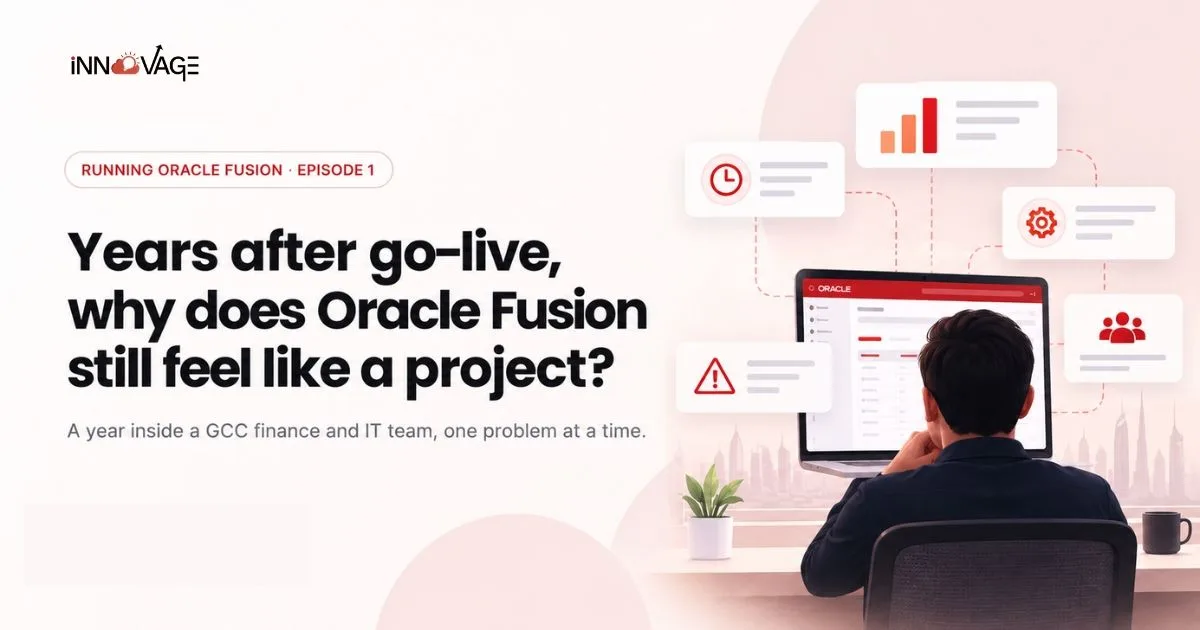
Years After Go-Live: Why Oracle Fusion Still Feels Like a Project
Key takeaways
- Many GCC companies are years into Oracle Fusion and still run it like an unfinished project.
- The usual cause is not the software. It is a support model that was set up in a hurry after hypercare and never revisited.
- The CFO, the CIO and the ERP lead each feel it differently, which is why the problem rarely gets owned.
- Good Oracle Fusion post go-live support does two jobs: it keeps the system stable, and it keeps improving how the business uses it.
Yet on a Monday morning in Dubai, the ERP lead at a mid-sized trading and distribution group opens a spreadsheet called "Fusion small issues". It has 63 rows. Some date back to the first month after go-live. Finance has its own list. So does procurement. Nobody is quite sure which list is the real one.
If that sounds familiar, you are not alone. It is one of the most common patterns we see across Oracle Fusion customers in the GCC: the system is live, but it still feels like a project that never quite finished.
This series follows one composite company as it fixes that, one problem a week. Each week, one of three people faces the next problem. This first episode is about why it happens at all.
What should Oracle Fusion post go-live support look like?
Oracle Fusion post go-live support is the ongoing work of keeping Fusion stable, current and useful after the implementation ends. It usually covers incident and ticket handling, testing and adoption of Oracle's quarterly updates, small enhancements and reports, integration monitoring, user and security administration, and a roadmap for what to improve next.
The first few weeks after go-live are normally covered by hypercare, a short period of intensive support from the implementation team. After that, support moves to "business as usual": an in-house team, an application managed services (AMS) partner, or a mix of both.
The handover from hypercare to business-as-usual support is where most of the trouble starts.
Why Oracle Fusion still feels like a project, years after go-live
Here are five signs we see again and again. If three or more apply to you, Fusion is probably still being run as a project rather than a platform.
1. The "small issues" list never shrinks
Every company has a backlog. The warning sign is a backlog with no owner, no priority and no end date. Items stay open for months because they are too small to fund as a project and too big for a support ticket.
2. Every quarterly update is a fire drill
Oracle updates Fusion every quarter. That is a feature, not a bug: new capabilities arrive without an upgrade project. But it means testing is a permanent part of running Fusion. When nobody plans for it, each update becomes two weeks of scramble, and occasionally something breaks in production.
3. Support only fixes what breaks
Many post go-live support contracts are scoped for break-fix only. Tickets get closed, but nothing improves. Processes that were configured quickly before go-live stay that way, and nobody is paid to revisit them.
4. Knowledge lives in a few people's heads
The implementer's documentation describes the system as it was on go-live day. Three years of fixes, workarounds and tweaks live in the memory of one or two people. When one of them goes on leave, or resigns, things slow down.
5. Finance quietly works around Fusion in Excel
Reconciliations, management reports and cash positions get rebuilt in spreadsheets because the Fusion version was never quite finished. It works, but it means the business is paying for an ERP and still running parts of finance outside it.
Sound familiar? See what Fusion support looks like after go-live →
The three people who feel it first

In our composite company, the problem shows up differently for each of three people. That is exactly why it is hard to fix: each of them sees a different symptom, so nobody sees the whole picture.
- The CFO feels it at month-end. The closure still takes ten days. Reports get rebuilt in Excel. Audit preparation is a scramble every December.
- The CIO feels it in the budget and the ticket queue. Support costs creep up, tickets pile up, and there is no clear owner for the Fusion roadmap.
- The ERP lead feels it every day. Every quarterly update is a fire drill, every request lands on their desk, and the backlog only grows.
Each of them is partly right about the cause, and each of them assumes someone else owns the fix.
It is not the software. It is the support model.
When Fusion still feels like a project years after go-live, the instinct is to blame the system. In our experience, the root cause is almost always how support was set up after go-live.
Three things tend to go wrong:
- Support was designed for stability, not improvement. The contract covers tickets and outages, not tuning processes, clearing the backlog or adopting new features.
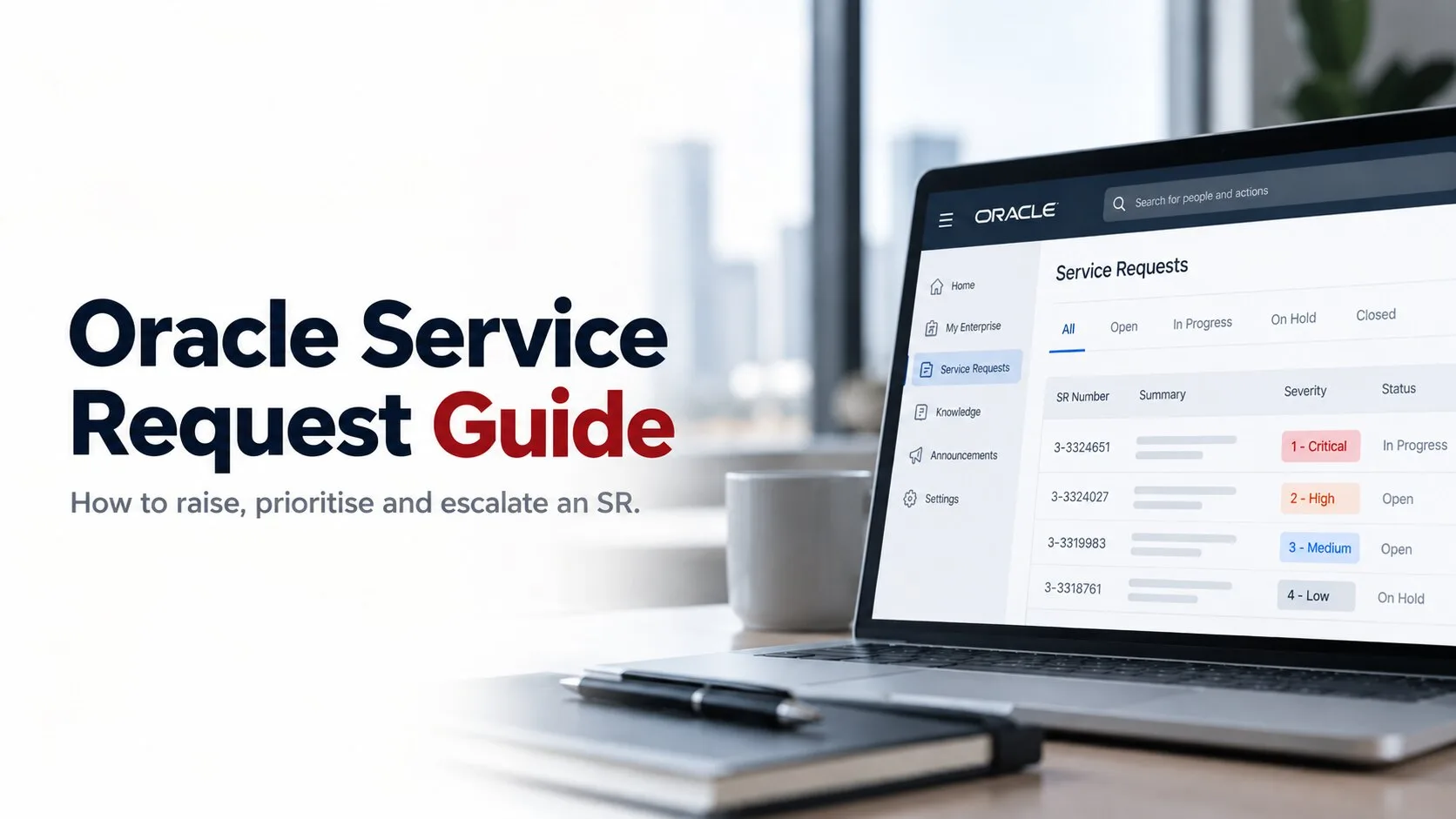
- Ownership is split between too many people. Oracle Support handles product defects through service requests. Configuration, custom reports, integrations and extensions are yours, or your partner's. If you have never mapped who owns what, gaps appear. (If you are unsure what Oracle itself will and will not fix, our guide on how to raise a service request with Oracle explains it.)
- Nobody owns the roadmap. Quarterly updates, Oracle's move to the Redwood user experience and new AI features all need decisions. Without an owner, those decisions default to "later".
None of these is a software problem. All of them are fixable.
If you went live recently: what hypercare should hand over
Hypercare support is the short, intensive period right after go-live, usually a few weeks to around three months, when the implementation team stays close to fix issues fast. A clean exit from hypercare prevents most of the problems above. Before you sign it off, make sure you have:
- A clear list of open issues, each with an owner and a target date
- Updated documentation of configuration, customizations and integrations as they actually run today
- A named owner for each Fusion module and each integration
- A plan and a test approach for the next quarterly update
- Agreed support terms for what happens after hypercare: who responds, how fast, and who handles improvements
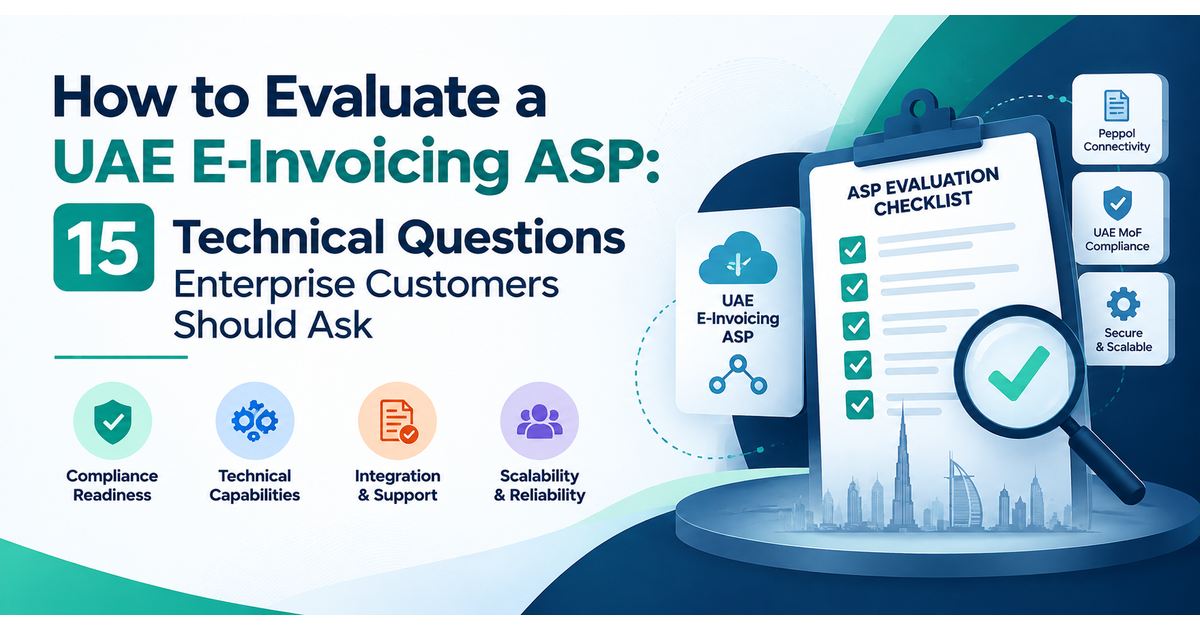
Going live on UAE e-invoicing as well? Our UAE e-invoicing cutover and hypercare checklist covers that go-live step by step.
Project or platform: a quick self-check

Answer yes or no to each question:
- Is there one named owner for your Oracle Fusion roadmap?
- Do you have a written test plan for every quarterly update?
- Does your support contract include improvements, not just fixes?
- Could someone new understand your customizations from the documentation alone?
- Does month-end close run inside Fusion, without spreadsheet workarounds?
- Did your Fusion backlog get shorter in the last six months?
Four or more "no" answers means Fusion is still being run as a project. That is the starting point for our composite company too.
What comes next in this series
Over the next twelve weeks, we follow the CFO, the CIO and the ERP lead as they work through it: from a slow month-end close and painful quarterly updates, to a proper health check, a decision about their support model, and a roadmap for 2027.
Next week, Episode 2: the CFO asks why month-end close still takes ten days on Oracle Fusion, and what it would take to fix it.
Frequently asked questions
What is post go-live support for Oracle Fusion?
It is the ongoing support that keeps Oracle Fusion stable and improving after the implementation project ends. It typically covers ticket handling, quarterly update testing, small enhancements and reports, integration monitoring, user administration and roadmap planning.
How long should hypercare last after an Oracle Fusion go-live?
Hypercare usually runs for a few weeks to around three months, depending on the size of the rollout. It should end with agreed exit criteria, not just a date on the calendar.
What is the difference between hypercare and AMS?
Hypercare is short-term, intensive support from the implementation team right after go-live. Application managed services (AMS) is the long-term support model that follows, delivered by an in-house team, a partner, or both.
Who should own Oracle Fusion after go-live?
One named person should own the Fusion roadmap, usually within IT or an ERP centre of excellence, with clear owners for each module and integration. Oracle Support handles product defects; configuration, reports, integrations and extensions are the customer's or their partner's responsibility.
How often does Oracle update Fusion?
Oracle releases Fusion Cloud Applications updates every quarter. Each update brings new features and fixes, so testing and adoption need to be a regular part of running Fusion.
Ready to run Fusion like a platform?
Innovage Cloud is an Oracle Partner with ISO 27001:2022 certification, working with Oracle Fusion customers across the GCC. Our team supports Fusion after go-live: fixing what breaks, testing every quarterly update, and steadily clearing the backlog.